

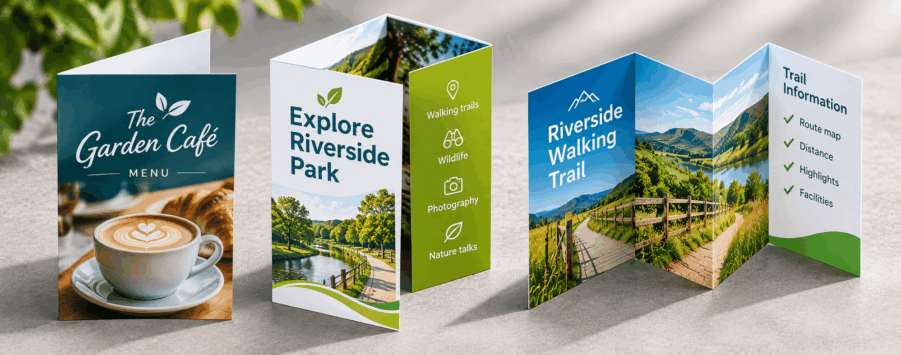
Types of Leaflet Folds: C-Fold, Z-Fold and More Explained
Ever ordered folded leaflets and been asked whether you want a C-fold or a Z-fold? They sound more complicated than they are, but the difference is something you’ll want to understand before getting started on your artwork.
Take an A4 leaflet folded down to DL. You can fold that same sheet in two different ways, giving you six printed panels in either case. What changes is how the leaflet opens, which can make one style more suitable than the other.
Then there are half-folds, roll-folds, concertina folds and a few others. Some are very similar, and the different names don’t always help!
Different Types of Leaflet Folds
Here’s a quick comparison of the most common leaflet folding options.
| Fold Type | How It Folds | Printed Panels |
|---|---|---|
| Half-fold | One fold through the middle | 4 |
| C-fold | Three panels, with one folding inside | 6 |
| Z-fold | Three panels folded in opposite directions | 6 |
| Roll-fold | Panels fold inwards around one another | 6, 8 or more |
| Concertina fold | A continuous zigzag fold | 6 or more |
| Cross-fold | The sheet is folded in two directions | Typically 8 |
| Gate fold | Two outer panels meet in the middle | 6 |
These are common folding arrangements rather than fixed rules. Some can have additional panels, while others need sections of different widths to allow everything to fold together properly.
Half-Fold Leaflets
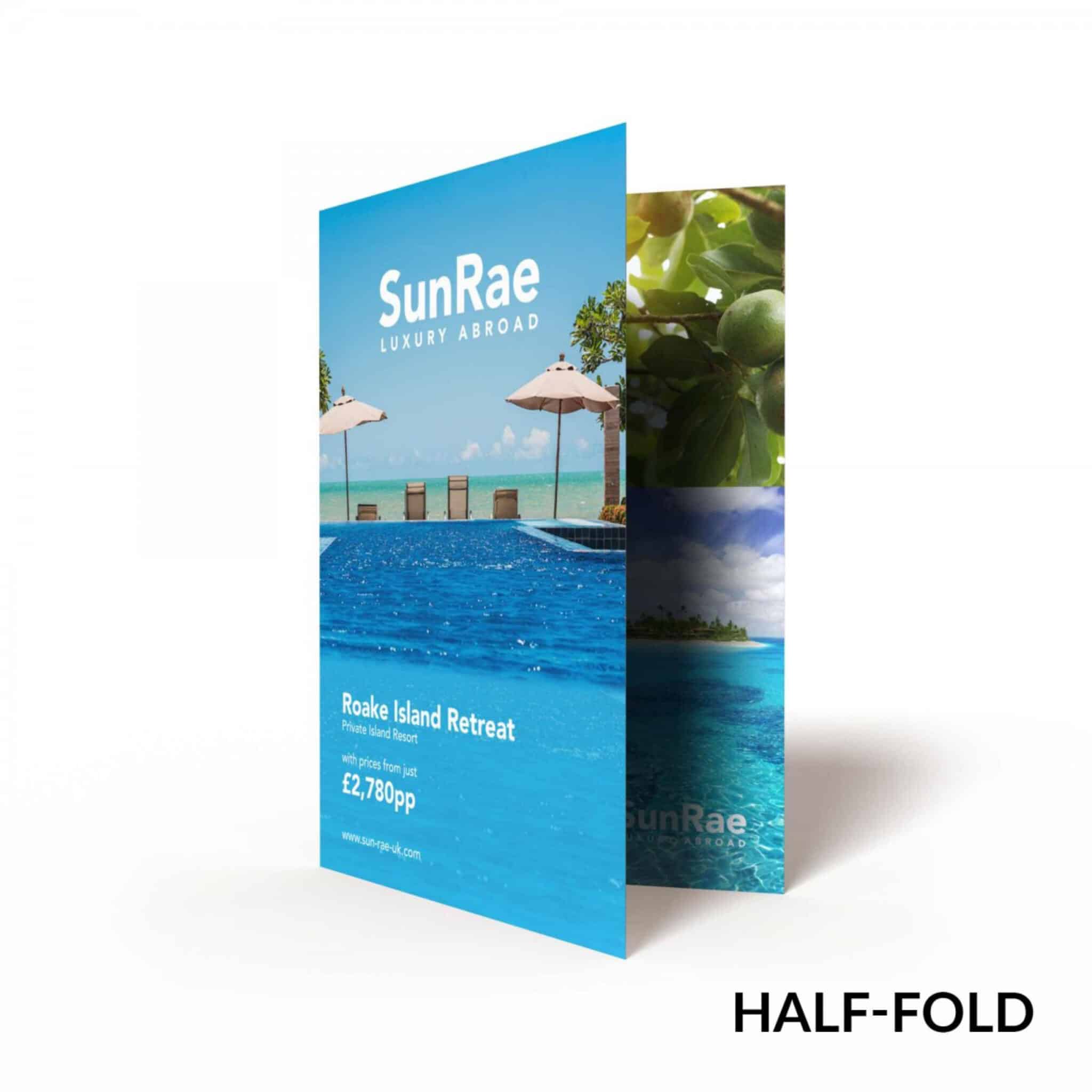
A half-fold is exactly what it sounds like… one fold down the middle of a sheet, giving you four printed pages.
Fold an A4 sheet in half and you’ve got an A5 leaflet, with a front cover, two inside pages and a back cover. It’s a format most people are already familiar with, whether they’ve picked up a restaurant menu, an order of service or a small information booklet.
There’s also a decent amount of space to work with. You could use the front for your main message, spread the important information across the two inside pages and leave the back for contact details or anything else people might need.
For a simple four-page leaflet, you really don’t need anything more complicated.
C-Fold Leaflets
Chances are you’ve picked up a C-fold leaflet plenty of times without knowing what it was called. They’re particularly common in visitor centres, hotels and anywhere businesses leave promotional leaflets for people to take away.
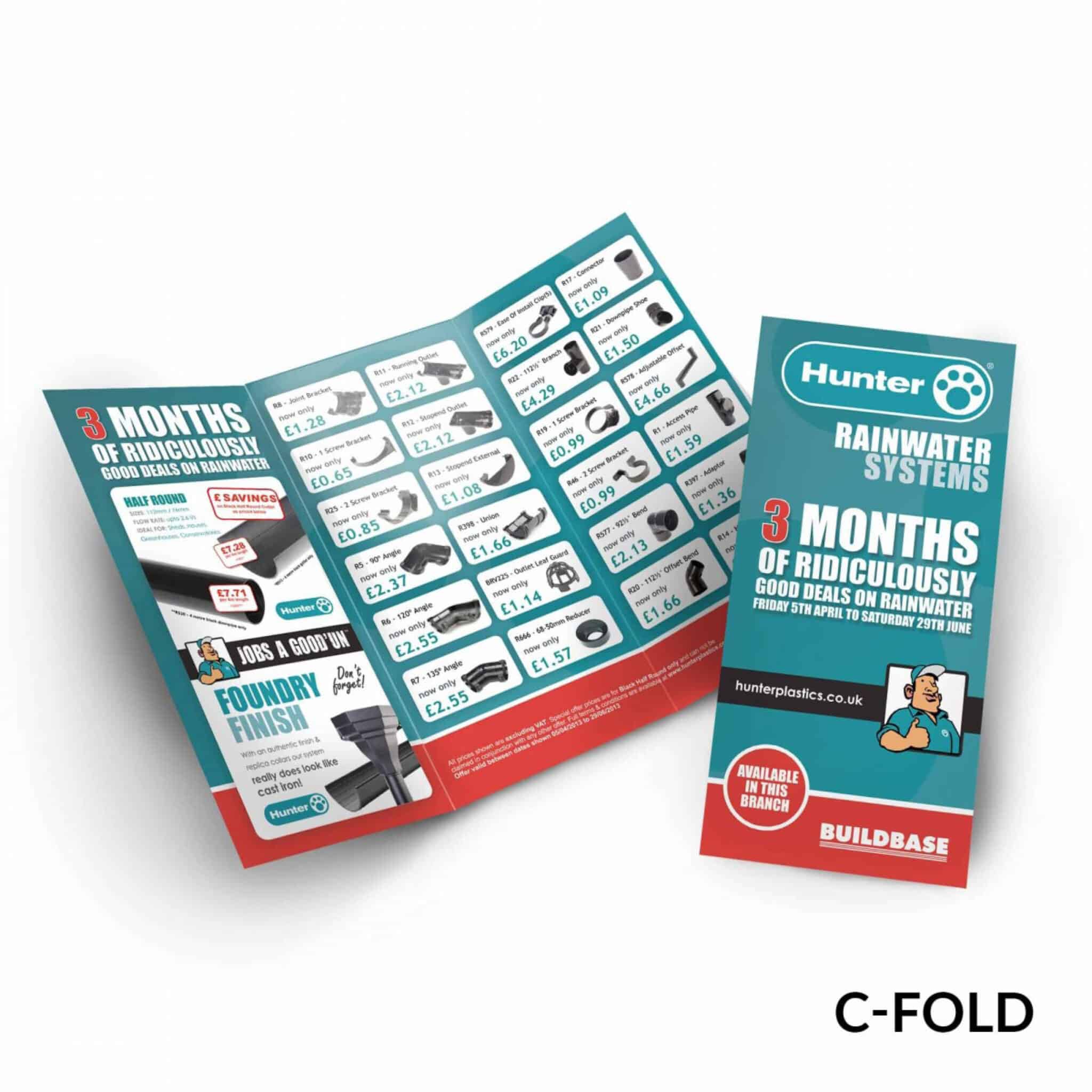
A C-fold divides the sheet into three panels. One folds inwards, with the other wrapping over it, creating six printed panels across both sides.
It’s a useful arrangement when you’ve got several pieces of information to share but want to give them some order. For example, a business leaflet could introduce your services on the front, go into more detail inside and finish with your contact information or a special offer.
You don’t need to fill every panel with text, either. A photograph, illustration or a little extra space around the important details can help keep everything easy to read.
One thing to remember is that the panel which folds inside needs to be slightly narrower than the others. It’s a small adjustment, but it allows the leaflet to close properly without the paper bunching up.
Z-Fold Leaflets
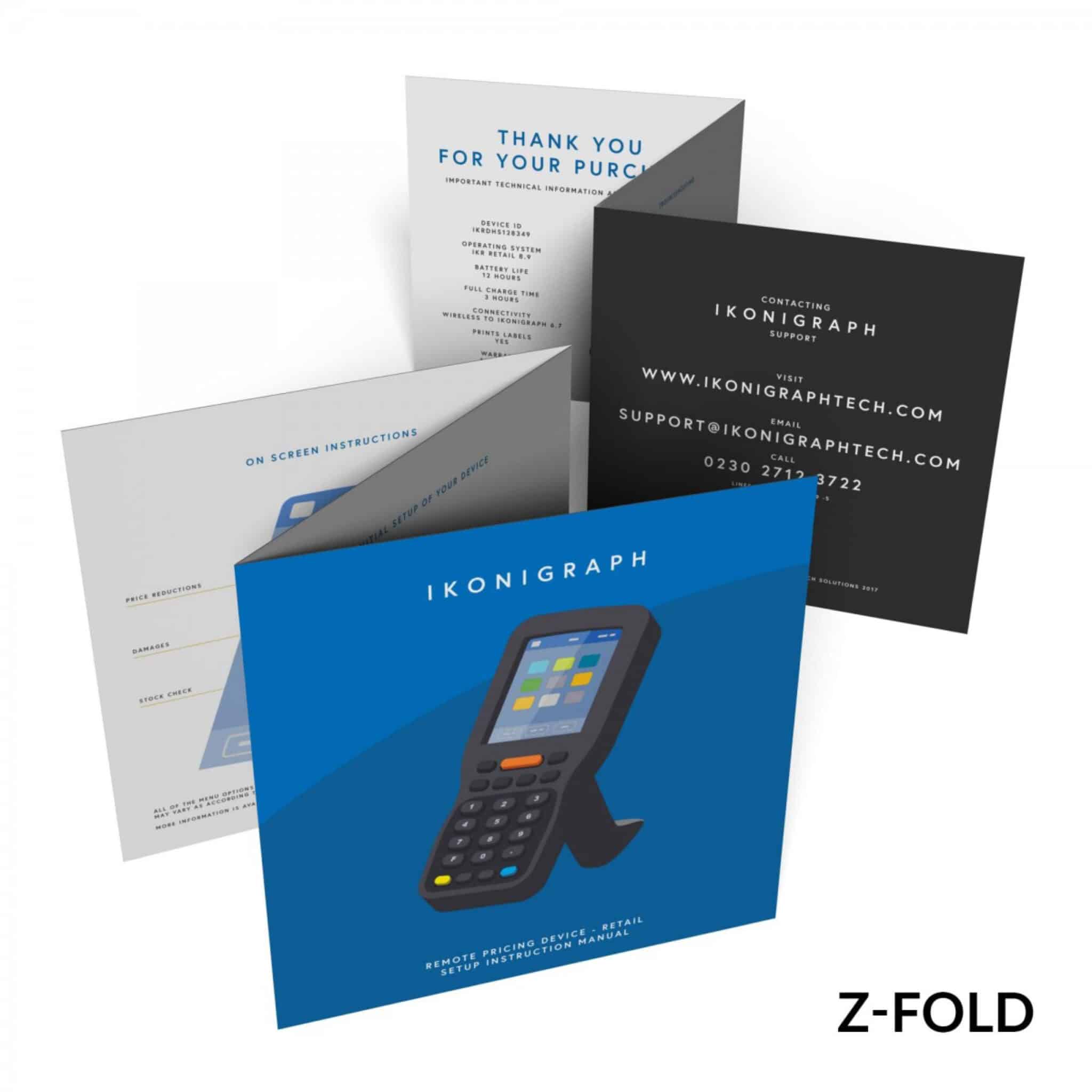
A Z-fold looks quite similar to a C-fold when it’s closed, but open one up and you’ll see the difference straight away.
Rather than wrapping inwards, the paper folds in opposite directions, creating a zigzag. You still have six printed panels, only this time the whole leaflet can be opened out into one continuous sheet.
That’s particularly handy for things like visitor maps. You might have opening times, admission prices and information about an attraction on one side, while the reverse opens out to reveal a map of the whole site.
The same approach works for walking routes, timelines and other information where people might want to see several sections together rather than opening them one at a time.
Another thing to know is that a standard three-panel Z-fold generally uses panels of equal width, unlike a C-fold where one needs to tuck inside.
Roll-Fold and Concertina Leaflets
Roll-folds and concertina folds are closely related to the folding styles we’ve already covered, although they can be used to create leaflets with more panels.
A roll-fold uses the same inward folding method as a C-fold. In fact, a six-page C-fold is often called a roll-fold or letter fold, depending on the printer.
But you don’t have to stop at six pages. An eight-page roll-fold gives you four panels on each side, with the extra sections wrapping around one another.
That additional space can be useful for longer menus, product ranges or detailed information leaflets where six panels might feel a little cramped.
You’ll need to be careful with the artwork, though. The further inside a panel sits, the less room it has, so the widths need to be adjusted to suit the folding arrangement. Simply dividing the sheet into equal sections won’t give you the right result.
Concertina folds work differently. They follow the same zigzag pattern as a Z-fold, but can continue across more panels.
Imagine a walking trail with several stops along the way. Each panel could contain information about a different location, while the entire leaflet opens out to show the complete route.
You can also let photographs or illustrations run across several panels, giving you more freedom when putting the artwork together.
What About Cross-Folds and Gate Folds?
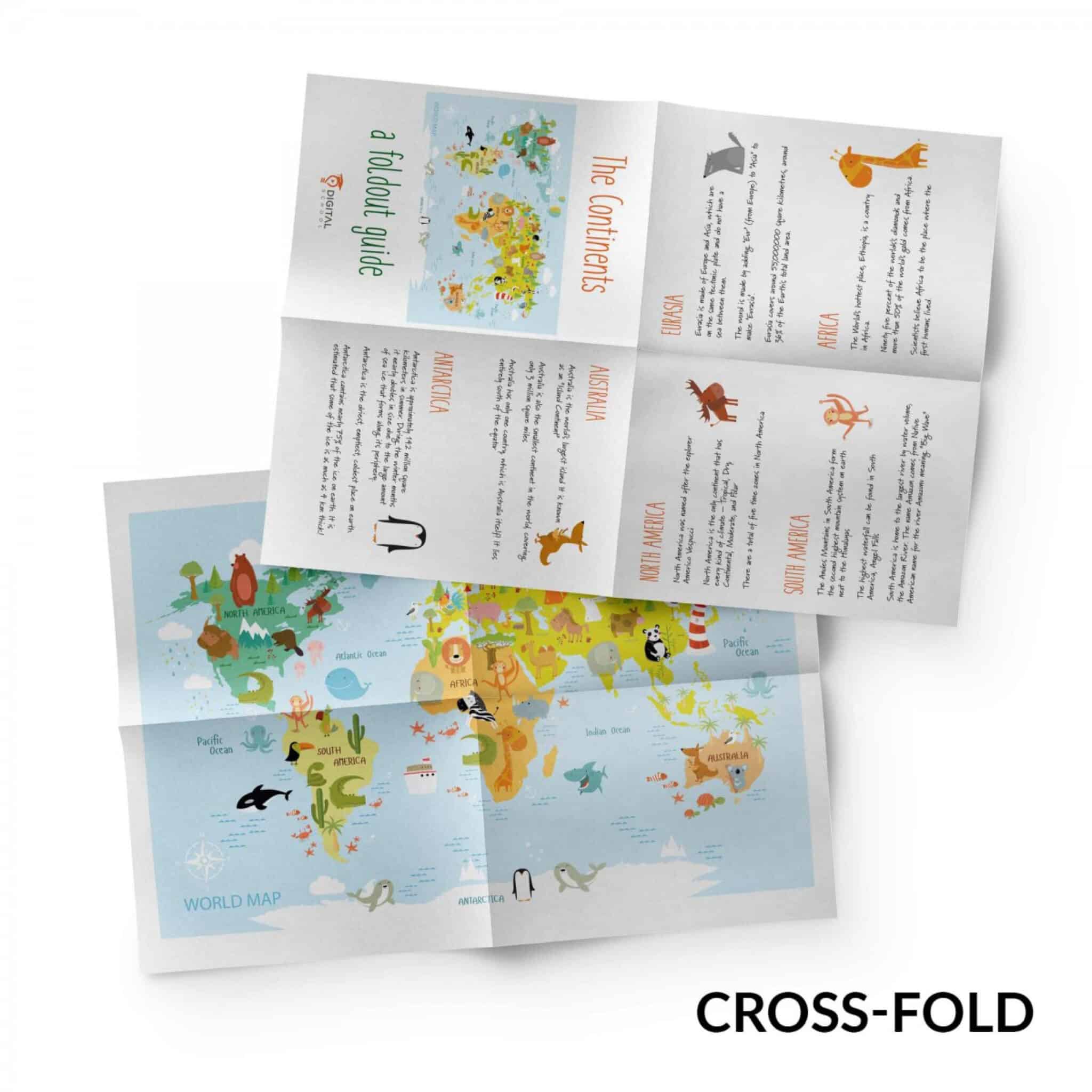
Cross-fold leaflets are often used for maps and larger information sheets. Rather than folding in the same direction each time, the paper is folded one way and then again across the other.
The result is a fairly large piece of print that folds down to something much smaller. Handy if you’re producing a map that people need to carry around, without asking them to walk about holding an A3 sheet of paper.
Gate folds are a little different. Two outer panels meet in the centre and open outwards, revealing the larger section underneath.
They can work well for invitations, product launches or promotional material where you’ve got a photograph or message you want people to discover as they open the leaflet.
Both can involve more specialist folding requirements, so we’d recommend checking what’s possible before preparing the artwork.
C-Fold vs Z-Fold: Which One Should You Choose?
Both give you six printed panels, so you’re working with roughly the same amount of space. The difference is what happens when someone opens the leaflet.
With a C-fold, the information appears in stages. That’s useful if you’re introducing your business, explaining a few services or putting together something where there’s a clear order to what people need to read.
A Z-fold gives you more freedom to spread your artwork across the sheet. If you’re printing a map, timeline or something that needs to be viewed as a whole, that might be the better choice.
And what about tri-fold leaflets?
You’ll often see that term used for leaflets divided into three panels, but it doesn’t always tell you which way the paper folds. Some printers use it specifically for C-folds, while others include Z-folds too.
It’s always best to check the folding arrangement before ordering, especially if your artwork has already been prepared.
Getting Your Artwork Ready for Folding
Once you’ve chosen your fold, the next job is making sure the artwork fits where it should.
Start with the flat sheet size and the finished folded size. An A4 sheet folded down to DL has a different layout from one folded in half to A5, even though you’re starting with exactly the same amount of paper.
The position of the fold lines matters too, particularly with C-folds and roll-folds where the panels aren’t all equal in width.
If you’re having trouble working out which panel goes where, try making a quick paper version first. Fold a sheet into the style you want, number each section and then open it back out. You’ll soon see where the front cover, back panel and inside information need to sit.
It’s a simple trick, but much easier than trying to picture everything from a flat artwork file.
Make sure you’ve allowed for the correct bleed around the outside edges and leave some breathing room around the fold lines. Important text, logos and other details are better kept away from the creases, particularly if the information needs to be read while the leaflet is folded.
Paper choice is another consideration. Heavier stocks may need creasing before folding to help prevent cracking along the fold, especially where you’ve got a lot of ink coverage.
And remember, every StressFreePrint order includes a free artwork check. If you’re unsure about the measurements or how to set up your file, get in touch and we’ll be happy to help.
Ready to Get Your Leaflets Printed?
Whether you’re putting together a menu, promotional leaflet or visitor guide, the fold you choose should work with the information you’re sharing.
Sometimes a simple half-fold is all you need. Other projects might benefit from a few extra panels or a layout that opens right out.
Take a look at our Folded Leaflets & Flyers range to explore the available sizes, paper stocks and folding options, with free UK mainland delivery included.
Got something more unusual in mind? Get in touch and we’ll happily take a look at your requirements.
