What Is a Compliment Slip? Size, Design & What to Include
Compliment slips are a simple bit of business stationery, but they’re still really useful when you want to add a quick personal note without writing a full letter.
They’re often popped into parcels, sample packs or paperwork with a short handwritten message such as Thanks for your order or As discussed. You might also hear them called comp slips or compliments slips, but they all do the same job.
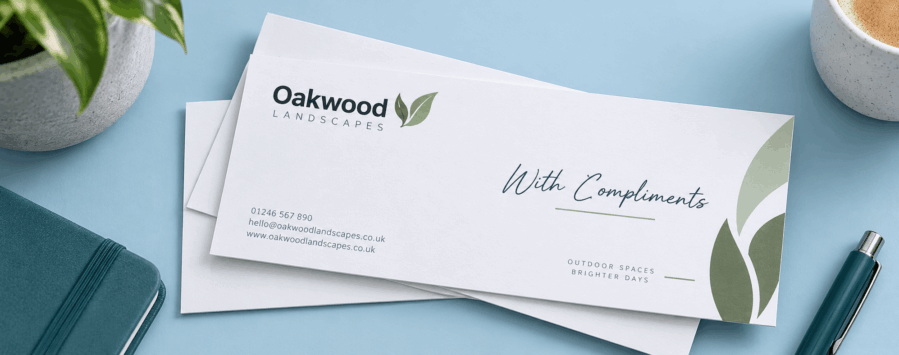
In the UK, the standard compliment slip size is 210mm x 99mm, which is commonly referred to as DL. It’s the same width as an A4 sheet but around a third of the height, giving you enough room for your branding while leaving plenty of space to write.
What should go on a compliment slip?
You really don’t need to squeeze too much onto one.
Your logo and business name will normally do most of the work, along with any contact details you actually want people to have. That might be your website, email address, telephone number or business address.
A simple With Compliments message is common too, although it’s by no means essential.
The important bit is the space you leave behind. If somebody has to squeeze a handwritten thank you between a logo, three phone numbers and a block of promotional text, the design has probably got a little too busy.
Compliment slips work best when they feel like part of the rest of your stationery. If you already have business cards, envelopes or letterheads, using the same colours, fonts and overall style will make everything feel much more joined up.
Keep the design simple
There’s not a huge amount of room to play with on a 210mm x 99mm slip, so a clean design normally works better than trying to fill every gap.
Give your logo enough space, keep the contact details easy to read and think about how the slip is actually going to be used.
If most of yours will be going into ecommerce orders, for example, you might only need your branding and a nice clear area for a quick note. If they’re being sent alongside samples or business documents, you may want them to feel a little more formal.
It’s also worth remembering that the slip needs to be practical as well as look good.
If you know you’ll be writing on them regularly, the stock matters. An uncoated paper is usually a good option because pens and pencils write on it comfortably. Some coated papers can still work, but certain pens may take longer to dry or feel quite different when you write on them. If you’re not sure which paper weight or finish is right, our paper guide explains the different options in a bit more detail.
Setting up the artwork
Start with the correct size rather than designing something roughly the right shape and resizing it later.
For a standard compliment slip, that means working at 210mm x 99mm before any bleed required by your printer is added.
If your background colour or artwork runs right to the edge, you’ll normally need bleed so a small amount can be trimmed away without leaving an unwanted white edge. Logos, contact details and anything else important should sit comfortably inside the finished edge too.
Use the best quality version of your logo you have available. A logo copied from a website or screenshot might look perfectly fine on screen but can reproduce less cleanly once it’s printed.
And it sounds obvious, but give the contact details one last check before sending the artwork over. Wrong phone numbers and email addresses are much easier to fix before a few hundred slips have been printed.
Where do compliment slips come in handy?
Anywhere a full letter would feel a bit much.
They can go inside online orders, sample packs, brochures, replacement goods, customer gifts or sets of documents. They’re also handy when you simply want to write Thank you, Sample enclosed or a quick note to somebody you’ve already spoken to.
That little handwritten message is really what makes them useful. It can make an otherwise routine parcel or piece of paperwork feel much more personal without adding much extra work.
If you’re using other printed stationery at the same time, it’s worth keeping everything visually consistent. A compliment slip, envelope and letterhead don’t need to look identical, but they should feel as though they’ve come from the same business.
Do you need a compliment slip template?
If you’re supplying your own artwork, using a proper print template is the easiest way to make sure everything is set up correctly.
It gives you the finished dimensions, bleed and safe areas to work with, which is much easier than trying to fix the layout afterwards.
Whether you’re designing in Canva, Illustrator or something else, get the size right at the beginning and build from there.
Compliment slips don’t need to be complicated. Keep the branding clear, leave yourself enough room to write and choose a paper that works for the way you’ll actually use them.
If you’re ready to get yours printed, you can take a look at our printed compliment slips and choose the quantity and paper that works for you.