
Why Branded Calendars Work for Business Marketing
Digital marketing might be a big part of how businesses reach their customers, but sometimes something physical can do a job that an email or social post can’t.
Branded calendars give your customers something useful while keeping your business close at hand. They might end up on an office wall, next to someone’s computer or somewhere at home… wherever they go, they’re designed to be used rather than simply looked at once and forgotten.
And there’s plenty you can do with them. From showcasing your work to thanking customers or simply helping them keep track of what’s coming up, a calendar can become a useful part of your marketing rather than just another place to put your logo.
Keep your brand visible all year round
One of the biggest advantages of a branded calendar is how long it sticks around. A leaflet or flyer might be picked up when someone needs it, whereas a useful calendar can earn a permanent spot on a desk or wall.
Every time someone checks a date, makes a note or looks at what’s coming up, your branding is there too. That’s what makes calendars particularly useful as promotional print… they have a genuine reason to stay around.
Think about what else your customers might find useful. Contact details, opening hours and your website can all have a place in the design, making it easy for someone to find what they need without overcrowding the calendar.
Build stronger customer relationships
A branded calendar can also make a good customer gift, particularly towards the end of the year. It’s something useful you can give as a thank you rather than sending another promotional message.
It doesn’t have to feel like an advert either. A well thought out calendar that’s useful or good to look at can be a simple way of showing customers you appreciate their business.
Showcase your brand personality
You’ve got much more space to work with than just adding a logo and calling it done. Photos, colours and typography can all be used to make the calendar feel like it actually belongs to your business.
You could showcase products, introduce your team, feature recent projects or use photography that’s relevant to what you do. Keep your usual brand colours and fonts running through the design, then add useful details such as your website or social media accounts where they make sense.
QR codes can work well too, particularly if there’s something useful to send people to. Just don’t let the marketing get in the way of the calendar itself… it still needs to be clear and easy to use.
Give your customers something away from the screen
Emails get deleted, social posts disappear down the feed and digital adverts are easy to scroll past. Print gives you another way to reach people, and a calendar has the added advantage of being something they can actually use.
Print and digital don’t need to work separately either. Add a QR code to a relevant page and someone can go straight from the calendar to a product, offer, booking page or piece of content online.
Make every month part of your marketing
Having a different page for each month gives you plenty of room to change things up as the year goes on. Rather than showing the same message throughout, each page can feature a different product, service, project or piece of content.
A restaurant might use seasonal dishes, for example, while a travel company could feature a different destination each month. Think about what changes throughout the year for your own business and you’ve probably already got the beginnings of a calendar.
Make it work for your audience
There’s no single way a business calendar needs to look. What goes into it really depends on who’s going to use it and what would actually be useful to them.
A few ideas to get you started:
- Restaurants and cafés – Feature seasonal dishes, menus or upcoming events.
- Estate agents – Showcase properties, local areas or useful moving dates.
- Schools – Include term dates, events and important reminders for parents.
- Retail businesses – Feature products, seasonal ranges or key shopping dates.
Before you start designing, think about who you’re making the calendar for and where they’re likely to use it. That can help you decide what to include as well as which type of calendar will work best.
Choose the right calendar for your business
The format matters just as much as what goes into the design. Think about where you want the calendar to end up and how you expect people to use it.
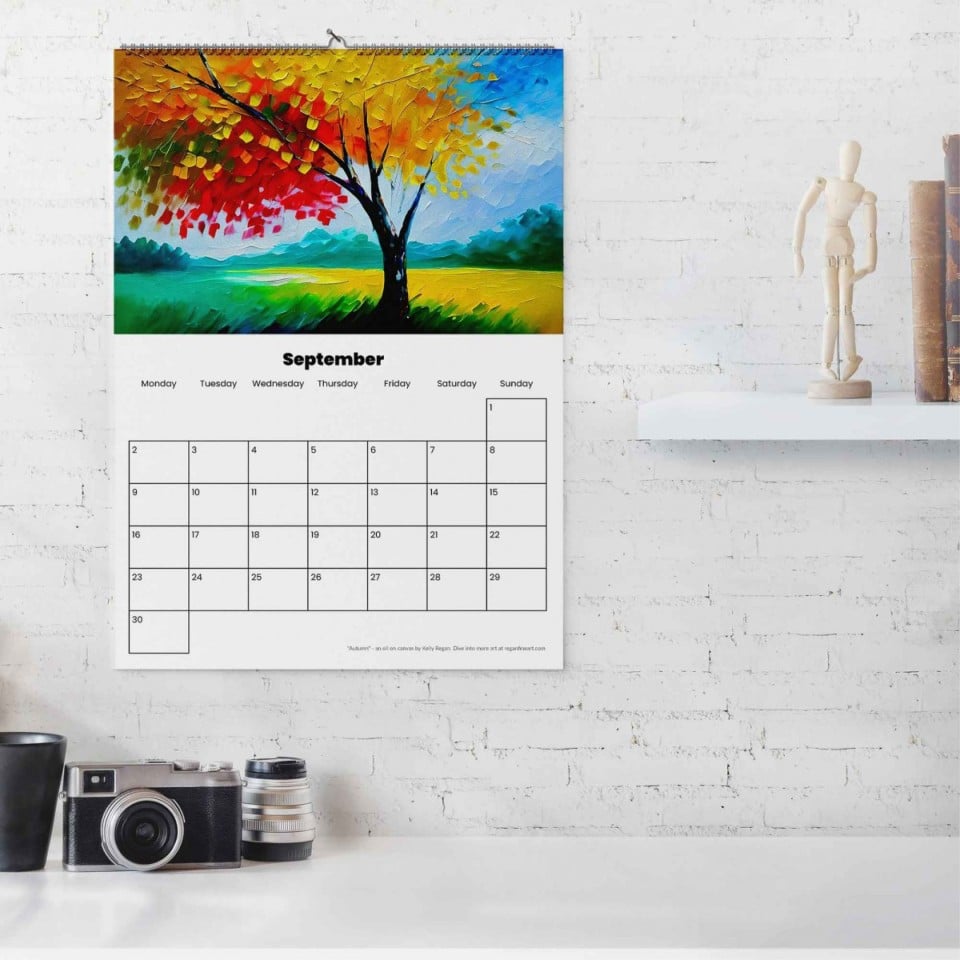
Stapled calendars are a simple, cost-effective choice when you want plenty of room for imagery and branding. Wire bound calendars give you a more durable finish, while slim wire bound calendars are a more compact option when wall space is limited.
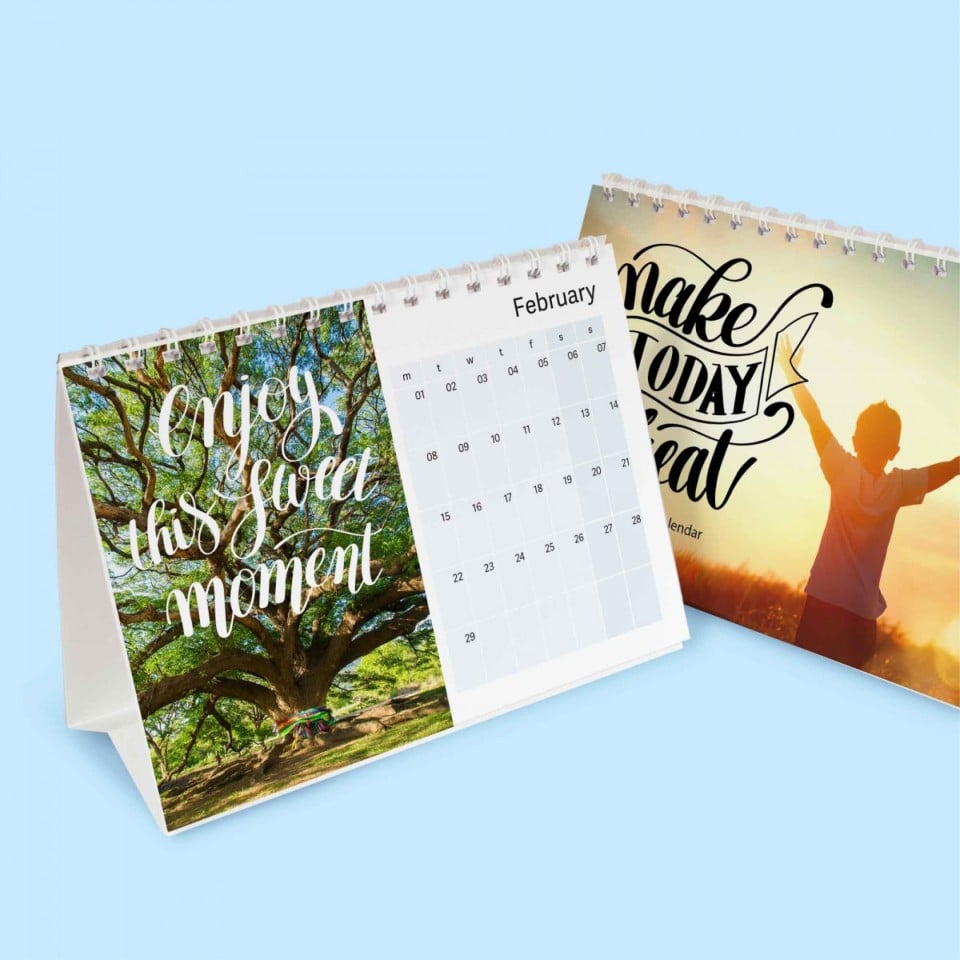
Desktop tent calendars and desktop flip calendars are made for desks, so they’re a natural fit for offices and workspaces. Wall planners give you much more space for dates, notes and schedules when practicality is the priority.
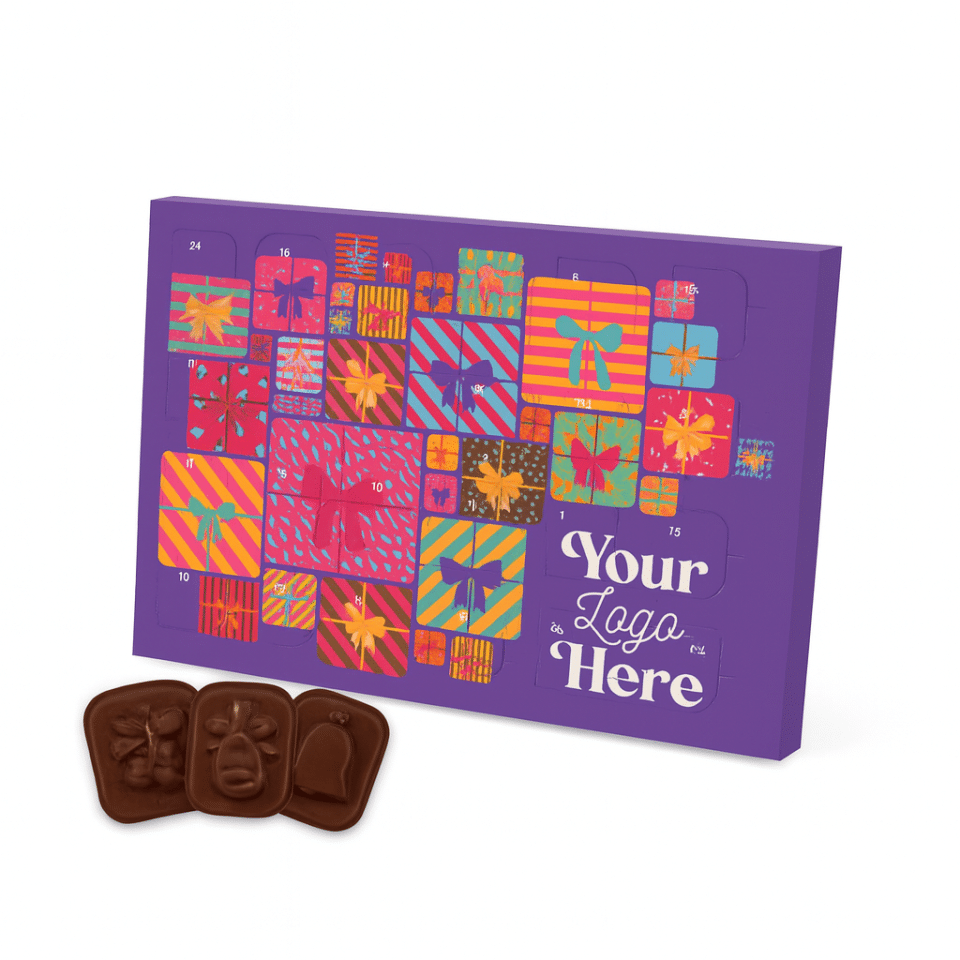
If you’re creating something to sell or give as a gift, retail packed calendars are worth considering. Direct mail calendars give you another way to get your calendar directly into customers’ hands, while advent calendars can bring products, offers or messages into a festive campaign.
There’s no need to choose the most elaborate option. Go with the format that makes sense for your audience, what you want the calendar to do and the budget you’re working with.
Start planning your next calendar
A good branded calendar doesn’t need to be complicated. Make it useful, give people a reason to keep it and use the space you’ve got to show what makes your business different.
Ready to get started? Explore our calendar printing options and find the format that works for your business.